Good News on Marine Recovery

Five years after a ban on bottom trawling along the Sussex coast, scientists, fishers and conservationists are reporting the first meaningful signs of seabed recovery — with mussel beds stretching more than a kilometre and increasing numbers of black sea bream detected in underwater surveys.
The Sussex Kelp Recovery Project (SKRP), described as the UK’s largest marine rewilding programme, was established following the introduction of a byelaw in 2021 by the Sussex Inshore Fisheries and Conservation Authority (IFCA), prohibiting bottom trawling across more than 300 square kilometres of seabed between Shoreham and Selsey. By 2019, an estimated 96% of the kelp forests that once lined the Sussex coastline had disappeared — lost to decades of trawling, sedimentation, marine heatwaves and storm damage.
The SKRP described the project as having witnessed “a quiet but powerful transformation beneath the waves.”
Follow this link to read the article about signs of seabed recovery along the Sussex Coast
CHASM on the Solar Boat
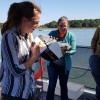
The Solar Boat is run by Chichester Harbour Conservancy. We had the most fantastic day for hands on learning about how marine specialists go about their work. Photos by Martin Davies, Hachem Kassem, Jane Cunningham Read More»
2023 BLUE Sediment Workshop
CHASM, in partnership with the marine charity BLUE Marine Foundation, delivered a workshop examining marine sediment influencing Selsey and the rest of the Sussex Coast. The workshop took place on 18 May 2023 and was funded by the Rewilding Network. This was the Sussex Sediment Monitoring and Adaptive Response Workshop, which brought together the key regulators involved in... Read More»
2024 CHASM Sediment Report

This report provides an update of analysis conducted as part of the CHASM (Crustacean, Habitats and Sediment Movement) project carried out by the University of Southampton in summer 2024. It seeks to understand environmental change from a sediments perspective, and sets out to answer a series of questions using various data sources and analysis. The questions are: 1. What sediments... Read More»